
Maritime Legal Authority
- Statute The Jones Act (46 U.S.C. § 30104)
- Vessel Types Tankers, Tugs, Dredges, Rigs
- Service Areas Texas & Louisiana, Gulf Coast, WorldWide
- Fee Structure Contingency (No Win, No Fee)
- Category Maritime
Visit Our Offshore Injury Website For More Information
Explore Our Dedicated Maritime Resource Center
Deep-dive into the technicalities of the Jones Act and General Maritime Law through our specialized portal. We provide comprehensive guides on maintenance and cure, unseaworthiness claims, and the specific rights of offshore oilfield workers.
Working on the water is one of the most dangerous jobs in America. Whether you are a deckhand on a tanker or a diver on a research vessel, a single moment of negligence can change your life forever. Under federal maritime law, specifically the Jones Act, you are not just a worker; you are a “seaman” with unique legal protections that go far beyond standard state workers’ compensation.
At Doyle Dennis Avery LLP, we specialize in holding negligent maritime employers accountable. If you have been injured, you need to understand the “Three Pillars of Recovery”:
-
-
Maintenance and Cure: Immediate payment for your daily living expenses (maintenance) and all necessary medical treatment (cure) until you reach Maximum Medical Improvement (MMI).
-
Jones Act Negligence: The right to sue your employer for damages if their negligence—even in the slightest degree—contributed to your injury.
-
Unseaworthiness: A claim against the vessel owner if the ship, its crew, or its equipment were not reasonably fit for their intended purpose.
-
No Win, No Fee! Contact Us for a Free Case Evaluation
Injured on the Job?
Protecting Maritime Workers’ Rights in Houston
Expert Legal Support for Maritime Workers Seeking Justice and Compensation. Houston’s Maritime Lawyers are Here to Help
Seamen Types Of Injuries
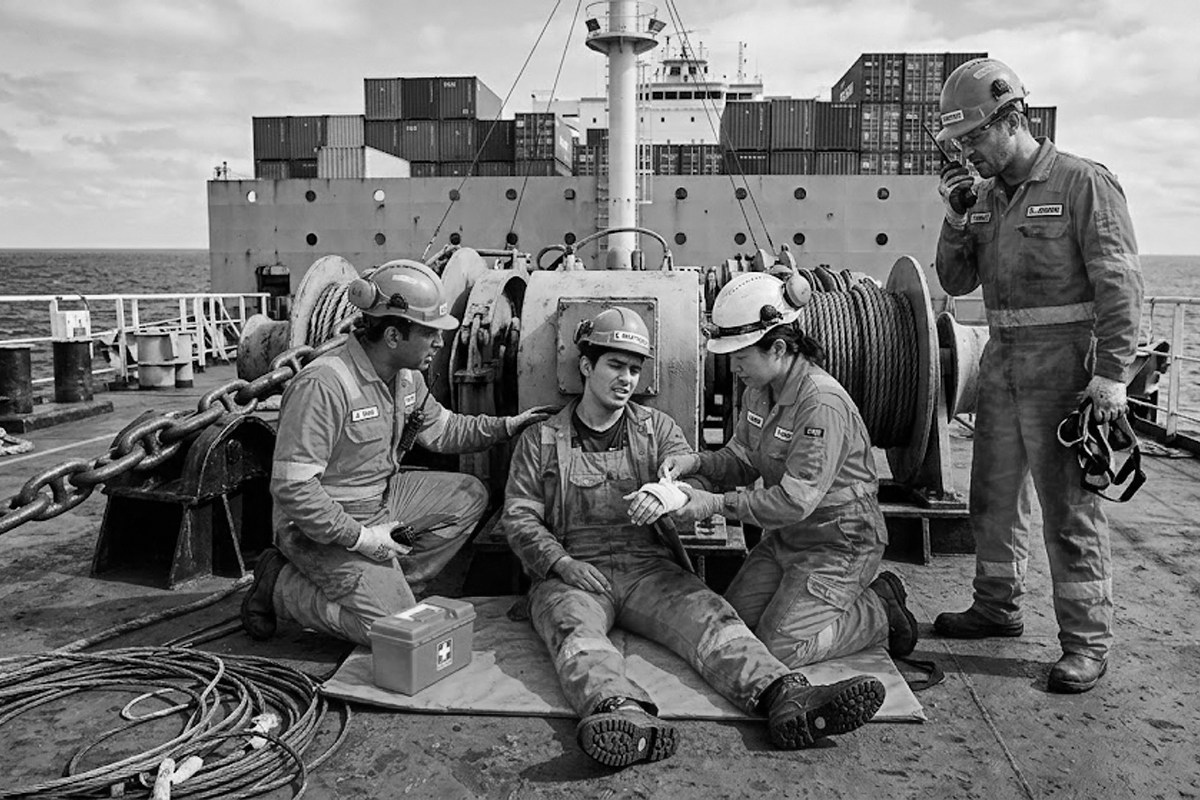
Injuries on Tankers, Cargo & Container Vessels
The sheer scale of tankers and container ships creates a high-risk environment. Cargo ship owners often prioritize speed and profit over safety, leading to preventable disasters.
-
Heavy Machinery & Equipment Malfunctions: Defective winches, cranes, and cargo-handling gear can cause catastrophic crush injuries or amputations.
-
Hazardous Material Exposure: Tanker crews are at constant risk of chemical burns, respiratory issues, and long-term illnesses from toxic cargo like crude oil or combustible gases.
-
Slip, Trip, and Falls: Open hatches, oily decks, and steep ladders on massive vessels are leading causes of traumatic brain injuries (TBIs) and spinal fractures.
Tugboat & Barge Injury Attorneys
Tug and barge operations are notoriously dangerous due to the “line-handling” required during towing and docking.
-
Line & Winch Accidents: Snapped tow lines can act like a whip, causing fatal “snap-back” injuries or severed limbs.
-
Crushing Injuries: Working between a tug and a barge during mooring often leads to workers being caught in “pinch points,” resulting in severe crushing of the torso or extremities.
-
Overwork & Fatigue: Small crews often work grueling shifts, leading to exhaustion-related errors that cause collisions or falls overboard.
Dredging Vessel Injuries
Dredge crews in the Houston Ship Channel and Gulf Coast face unique risks from the heavy, vibrating machinery required to clear sediment.
-
Cutterhead & Pipeline Accidents: Managing massive suction pipes and rotating cutterheads involves high-pressure equipment that can fail violently.
-
Unstable Work Surfaces: Constant vibration and shifting water conditions make dredge decks incredibly slippery and unstable, leading to chronic back and knee injuries.
Workboat & Inland Marine Injuries
Inland waterways, rivers, and bays are crowded with workboats, crew boats, and supply vessels. These “vessels in navigation” are fully covered by the Jones Act.
-
Collisions: High traffic in narrow channels leads to sudden groundings or collisions, flinging workers against steel bulkheads.
-
Man Overboard: Small workboats are more susceptible to capsizing or throwing workers into the water, where drowning and hypothermia are immediate threats.
Dive Boats & Divers
Commercial diving is a specialized field with some of the strictest safety regulations, yet contractors frequently cut corners on decompression plans and equipment checks.
-
Decompression Sickness (“The Bends”): Failure to monitor ascent rates or provide adequate hyperbaric support can lead to permanent neurological damage.
-
Equipment Failure: Negligent maintenance of air flow systems or communication gear can turn a routine dive into a fatal event.
-
Propeller Strikes: Failure to properly secure or lockout vessel engines while divers are in the water is a common source of catastrophic injury.
Spine, Neck, and Back Injuries
For those classified as seamen—typically workers who spend at least 30% of their time on a vessel in navigation—the Jones Act provides a powerful right to sue an employer for negligence.
-
Broader Compensation: Unlike standard workers’ comp, a Jones Act claim allows you to seek “full” damages, including pain and suffering, mental anguish, and loss of enjoyment of life.
-
Low Burden of Proof: To win, you only need to show that your employer’s negligence played even a small part—”however slight”—in causing your neck or back injury.
-
Pre-existing Conditions: You are still entitled to compensation even if the accident simply aggravated a previous back issue or degenerative disc disease.
Firm Victories
Claims: Jones Act/Maritime Law
Jury Verdict: $7.86 million – Gillies v. Valaris PLC
On January 12, 2022, Doyle Dennis Avery LLP secured a $7.86 million verdict on behalf of Gordon Gillies, a drill ship operations adviser, who was injured while working on a vessel in the Gulf of Mexico.
Claims: General Maritime Law/Negligence
Jury Verdict: $2.16 million (Attorneys Fees: $820,000; Expenses: $117,502.70; injury – lumbar injuries requiring surgery and post traumatic stress disorder).
Melvin Pace, a roustabout, working on an offshore oil production platform in the Gulf of Mexico was injured when the helicopter, a Sikorsky 76, transporting him and a crew back to shore caught fire and violently crashed into the Gulf of Mexico.
Claims: Jones Act/Negligence/Unseaworthiness
Jury Verdict: $2.56 million (Reduced on appeal to $2,141,716.75 – Attorneys Fees: $936,772.52; Expenses: $77,625.97; injury – unoperated cervical herniation and leg lacerations).
When a major U.S. shipping company refused to honor its responsibilities to a long-time employee who suffered career-ending injuries as a result of a fall on a tanker in the Gulf of Alaska, Doyle Dennis Avery LLP took the case to trial. A Texas jury returned a verdict for Doyle Dennis Avery LLP’ client of over $2.56 million.
Frequently Asked Questions (FAQ) for Injured Seamen
What should I do immediately after a maritime injury?
Report the accident to your captain or supervisor immediately and ensure an official accident report is filed. Seek medical attention from a doctor of your choice—not just the company doctor.
How long do I have to file a Jones Act claim?
Generally, you have three years from the date of the injury to file a lawsuit under the Jones Act. However, if the injury occurred on a government-owned vessel, that timeline may be shorter.
What if I was partially at fault for my accident?
Under maritime law, you can still recover compensation even if you contributed to the accident. Your total award may be reduced by your percentage of fault, but you are not barred from seeking justice.
Am I a "seaman" under the Jones Act?
Generally, you qualify if you spend at least 30% of your working time on a vessel (or fleet of vessels) in navigation and your duties contribute to the mission of that vessel.